
Facebook and Instagram can produce solar leads in volume, often at a lower cost per lead than Google. WordStream's 2025 benchmarks put the median cost per lead for US lead campaigns at $27.66 overall and $41.26 for home and home improvement. The catch is well known to every installer who has tried it: a lot of those leads are renters, people who did not mean to submit, or people "just looking". The solution is in the set-up.
Why Facebook works for solar
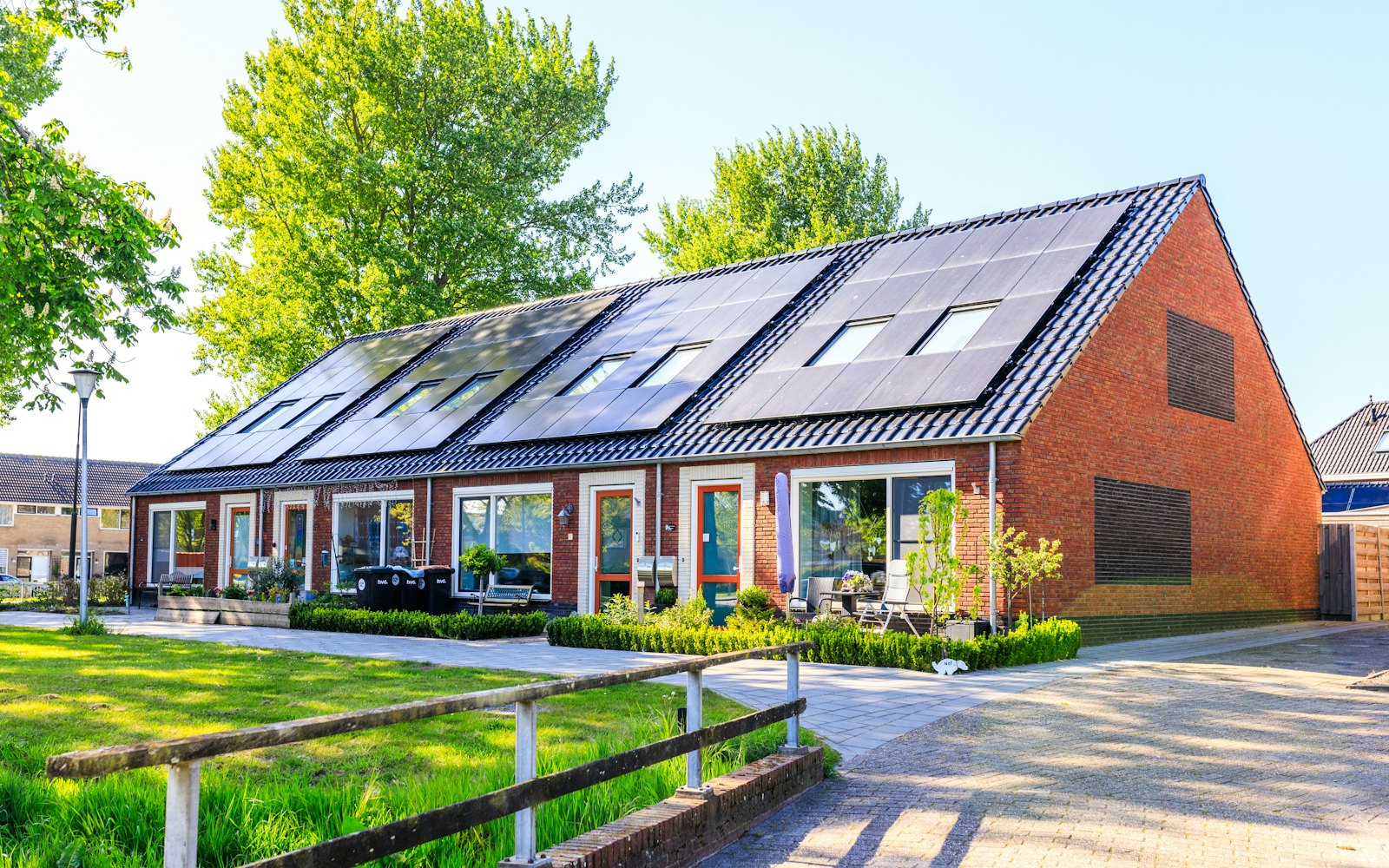
- Solar is visual. Panels on a recognisable local roof stop people scrolling.
- Many buyers are not searching yet. They are interested in lower bills but have not started researching. Meta reaches them earlier than Google.
- The decision takes time. Retargeting keeps you visible for the weeks or months it takes.
Targeting
- Location control: the postcodes you install in. Set it as an audience control so Meta cannot go beyond it.
- Broad or Advantage+ audience within that area, letting creative and qualifying questions do the filtering.
- Lookalikes of past customers, not of all leads.
- Retargeting website visitors and video viewers.
- Exclusions: existing customers and recent leads.
Creative that attracts buyers
- Real installations with the town named: "4 kWp system with battery, just installed in Market Harborough."
- Short videos: a drone shot of a finished roof, the installer explaining what was fitted, a homeowner showing their app.
- Honest price anchors: "Most 4 kWp systems we fit cost £6,500 to £8,000." Published 2026 figures put 4 kWp systems in that range (Heatable).
- Savings, stated carefully: estimated annual savings for a 4 kWp system of around £465 to £585 (Heatable, 2026), with a note that savings depend on usage and tariffs.
- Timely facts: the 0% VAT rate on domestic solar in Great Britain runs until 31 March 2027 unless extended.
Avoid "free solar panels", "government grant" claims you cannot back up, and exaggerated savings. They attract the wrong leads and can breach advertising rules.
Lead forms that filter
- Form type: Higher intent, which adds a review screen.
- Questions: Do you own your home? (Yes / No / Renting) · Roof type (Pitched / Flat / Not sure) · Monthly electricity bill (Under £100 / £100 to £200 / £200+) · Interested in a battery? · Postcode.
- Conditional logic: close the form politely for renters or out-of-area postcodes.
- Intro: explain what happens next: "We'll call within two hours to arrange a free remote survey."
Alternatively, send traffic to a landing page with a savings estimate tool. Fewer leads, usually better quality.
Follow-up is where Meta solar leads are won
- Instant text with your name and photo.
- Call within the hour.
- Three attempts over two days.
- Email with a short case study of a nearby installation.
- Add non-responders to a nurture list for occasional updates.
Budget and expected numbers
Illustrative example, not a benchmark.
Against a typical installed value of £6,500 or more, £300 per installation is affordable. If your installation rate is much lower, look at qualifying and follow-up before cutting the budget.
Send quality signals back to Meta
Use the Conversions API to send lead status from your CRM: survey booked, quote sent, installed. Optimising towards later stages teaches Meta to find people who buy, not just people who fill in forms.
Facebook alongside Google
Meta builds interest; Google captures people ready to compare installers. Many installers run both, with Meta also retargeting Google visitors. Compare them on cost per installation. See Google Ads for solar companies and fixing low-quality Facebook leads.
Frequently asked questions
Do Facebook ads work for solar companies?
Yes, for volume and early-stage interest, when targeting is limited to your area, lead forms ask qualifying questions and follow-up is fast. Judge results on installations, not form-fills.
How much does a solar lead from Facebook cost?
It varies by area and offer. WordStream’s 2025 US benchmarks put the median for home and home improvement lead campaigns at $41.26. Track your own cost per installation.
How do I stop renters filling in solar lead forms?
Ask "Do you own your home?" as the first question and use conditional logic to close the form politely for renters.
What should solar Facebook ads show?
Real local installations, short videos, honest price ranges and carefully stated savings estimates. Avoid "free solar" or unsupported grant claims.
Related guides
- How to Generate Solar Leads That Turn Into Installations
- Meta Instant Forms vs Landing Pages
- Google Ads for Solar Companies
Sources
- Heatable, solar panel costs UK (updated 13 October 2026)
- Solar Energy UK, VAT on solar and battery storage
- WordStream, Facebook Ads Benchmarks 2025
- Jon Loomer, "A guide to instant forms"
Want Facebook solar leads that book surveys?
Ask for a free review of your Meta ads. We will check targeting, forms, follow-up and tracking.